Renting LinkedIn Account: Safer B2B Strategies for 2026 Success

On the surface, renting a LinkedIn account sounds like a clever hack. For sales teams and agencies under constant pressure to generate B2B leads, it promises a fast lane to scaling outreach without the usual warm-up period. But this shortcut is a direct violation of LinkedIn's policies, and it almost always ends in disaster: banned accounts, vanished leads, and a stained company reputation.
The Hidden Market of Rented LinkedIn Accounts
So, what’s really going on when you "rent" a profile? A whole underground market has popped up to meet the demand from sales teams scrambling for results. As LinkedIn gets better at spotting and shutting down automation and fake profiles, some teams get desperate enough to try these risky workarounds.
Think of it like leasing a high-performance sports car that comes with a sketchy title and zero insurance. It looks fast and promises an immediate thrill, but a catastrophic breakdown isn't just a risk—it's practically a certainty. When your rented account gets banned, you lose everything overnight.
Why This Market Thrives on Risk
This shady economy is built on a simple, flawed idea: that a rented profile is just a disposable tool. Providers will often dangle "aged" or "warmed-up" accounts in front of you, claiming they’re safer. The reality is that these accounts are usually recycled, shared between multiple users, and already have a history of suspicious activity that puts them on LinkedIn's radar.
LinkedIn’s security algorithms are built specifically to sniff out this kind of inauthentic behavior. In fact, a 2023 report from their safety team revealed that over 21 million fake accounts were caught and removed in just the first half of the year. A massive 82% of them were flagged for suspicious automation—exactly what rented accounts are used for. You can dig into the specifics yourself in LinkedIn's transparency report on platform safety.
The fundamental problem with the rental model is that you never actually own the asset. You’re building your entire outreach strategy on borrowed ground, and the landlord can evict you at any moment, taking all your hard-earned connections and leads along with them.
This is why owning your outreach assets is so critical. The alternative, as shown in this screenshot from BIDVA, is to build on a solid foundation.
The image contrasts the risk of renting with the stability of ownership, pointing to benefits like a "Higher Trust Score" and "Full Ownership"—the very things you give up when you rent.
The Inevitable Downfall
Ultimately, renting an account is a strategy designed to fail because it works against the very fabric of the platform. When the ban hammer finally falls, it’s not just the leads and conversations that disappear. Your company’s domain and brand can also get flagged, causing long-term headaches that go far beyond one failed campaign.
The initial convenience is quickly wiped out by the severe consequences, making it a high-risk, low-reward gamble for any serious business. It becomes obvious that safer, more durable alternatives aren't just a better option; they're the only real path to sustainable B2B growth. Investing in an asset you truly own is the only way to build an outreach engine that lasts.
When it comes to scaling your outreach, you’ll find there are three main ways to get more LinkedIn accounts: renting, buying, or truly owning them. Each path comes with its own set of trade-offs, and understanding the difference is what separates a successful, long-term campaign from one that crashes and burns.
Let's use a simple analogy. Renting a LinkedIn account is like crashing on a friend's couch. It's a quick fix, but you have no privacy, no stability, and you could be asked to leave at a moment's notice. It’s temporary and unreliable.
Buying a generic, off-the-shelf account is a step up—sort of. It’s like buying a foreclosed house sight unseen. You might hold the keys, but it probably has a sketchy history, needs a ton of work, and you might discover the title isn't clean, forcing you to abandon it.
Then there's owning a properly verified and warmed-up account. This is like buying a new home with your name on the deed, a clean inspection, and a solid foundation. You have total control and can build its value over time, making it a real asset.
To make this crystal clear, let's break down the key differences between these models.
Comparing Account Acquisition Models
This table lays out the fundamental pros and cons of renting, buying, or owning your LinkedIn outreach accounts.
| Feature | Renting Accounts | Buying Generic Accounts | Owning Verified Accounts (BIDVA) |
|---|---|---|---|
| Control | None. The provider can reclaim it anytime. | Limited. High risk of being reclaimed or banned. | Full control. You get exclusive email & password. |
| Longevity | Very short. High chance of a quick ban. | Short. Easily flagged and suspended. | Long-term. Built to last and grow in value. |
| Asset Value | Zero. It's a disposable expense. | Minimal. A fragile, temporary tool. | High. Becomes a more powerful asset over time. |
| Trust Signals | Very low. Often shared and recycled. | Almost none. Empty profiles with no history. | High. ID-verified with an established network. |
| Ban Risk | Extremely high. The riskiest option. | High. Created in bulk, easy for LinkedIn to spot. | Very low. Built to mimic real user behavior. |
As you can see, the path you choose has a massive impact on the security and effectiveness of your campaigns.
The High Risk of Renting an Account
Renting a LinkedIn account is, without a doubt, the most dangerous game you can play. You're essentially paying for temporary access to a profile someone else owns—and one that's likely been passed around to countless other renters before you. This is a huge red flag for LinkedIn’s security systems.
The bottom line is you have zero control. You're building your entire outreach strategy on a foundation you can't secure.
- No Asset Control: You never truly own the profile. Every connection, every conversation, and every lead you generate can disappear in an instant if the account is banned or the owner decides to take it back.
- High Ban Probability: These accounts are ticking time bombs. They’re often accessed from shared IPs and have inconsistent activity histories that LinkedIn's algorithms are designed to catch.
- Reputational Damage: When—not if—the account gets banned, it can be traced back to your company. This could get your domain flagged by LinkedIn and do serious damage to your brand’s credibility.
This infographic paints a pretty clear picture of the dangers.
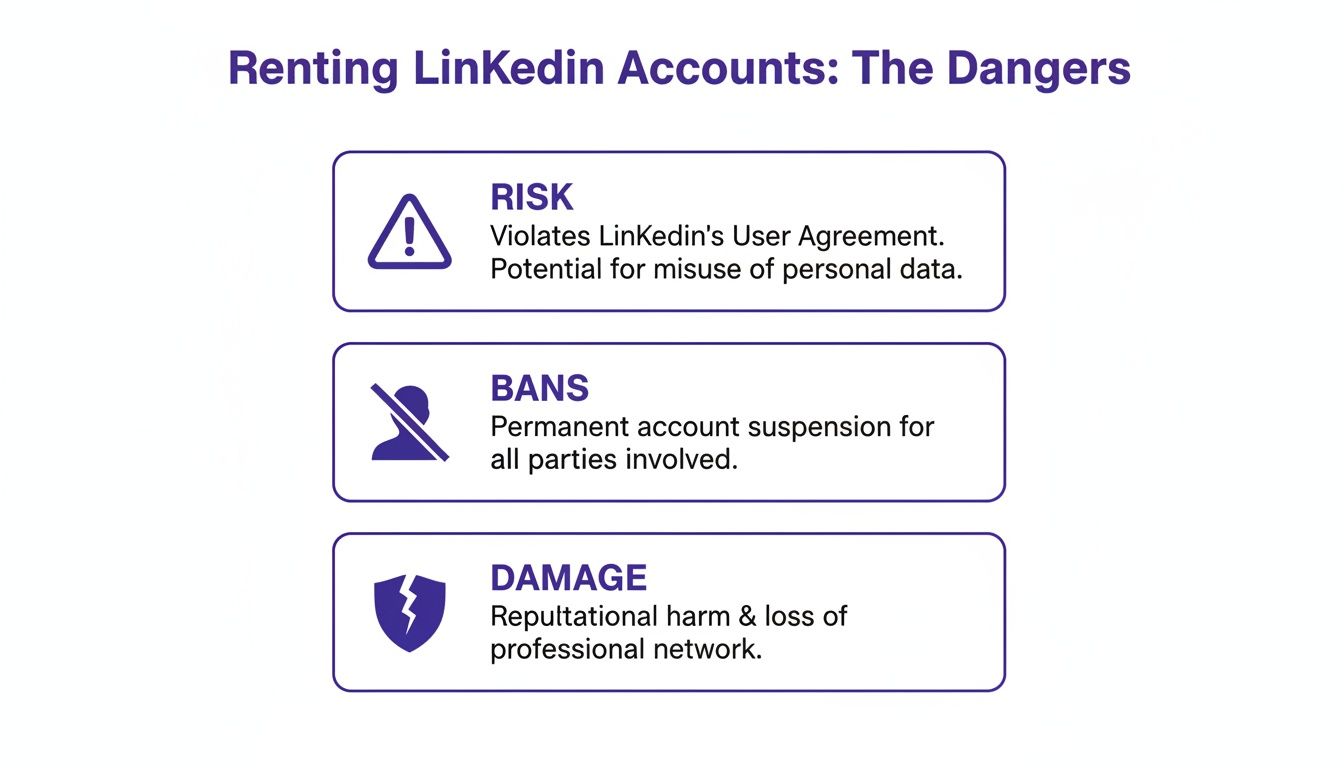
The rental model is simply an unsustainable strategy, packed with unavoidable risks that lead to near-certain bans and brand damage.
Buying Generic Accounts Is a Minor Step Up
At first glance, buying a pre-made account might seem safer than renting. The problem is, these are usually "burner" accounts, created in bulk with no real person or history behind them. They lack the established trust needed for any meaningful outreach.
Sure, you get login credentials, but these profiles are incredibly fragile. They often have strange names, stock profile pictures, and no legitimate network, making them stick out like a sore thumb to both LinkedIn and your potential prospects.
The fatal flaw with generic, bought accounts is their lack of a digital footprint. They are empty shells that LinkedIn's system is built to find and remove, often just days after you start your first campaign.
The Strategic Power of True Ownership
The third option—and the only one we recommend for serious teams—is true ownership of a high-quality, verified account. This isn’t just a purchase; it’s a long-term strategic investment in your outreach infrastructure.
When you own a properly verified account, you get:
- Full Control and Ownership: The account is 100% yours, with exclusive email and password access. You can secure it, build on it, and treat it as a permanent company asset.
- Enhanced Trust and Credibility: Our profiles are ID-verified and come pre-warmed with 200-500+ connections. This gives them an established history and trust score, allowing for higher outreach limits and better deliverability right from the start.
- Long-Term Asset Value: Unlike a disposable rental, an owned account grows more valuable with time. As you build its network and history, its capacity for safe, effective outreach increases, compounding your return on investment.
This approach shifts your thinking from finding cheap, temporary tools to building a portfolio of durable, high-performing assets. For any B2B team or agency serious about scaling lead generation, this is the only model that guarantees security, performance, and lasting success. If you're ready to move beyond risky shortcuts, our guide on LinkedIn account rental alternatives offers a deeper dive into building a powerful and sustainable strategy.
Why Rented LinkedIn Accounts Are Built to Fail
Let's get right to it. The idea of renting a LinkedIn account sounds like a clever shortcut, but in reality, these profiles are ticking time bombs. Their entire structure is at odds with the sophisticated security systems LinkedIn has spent years building. It’s not just a risky move; it’s practically an invitation for a swift account ban.
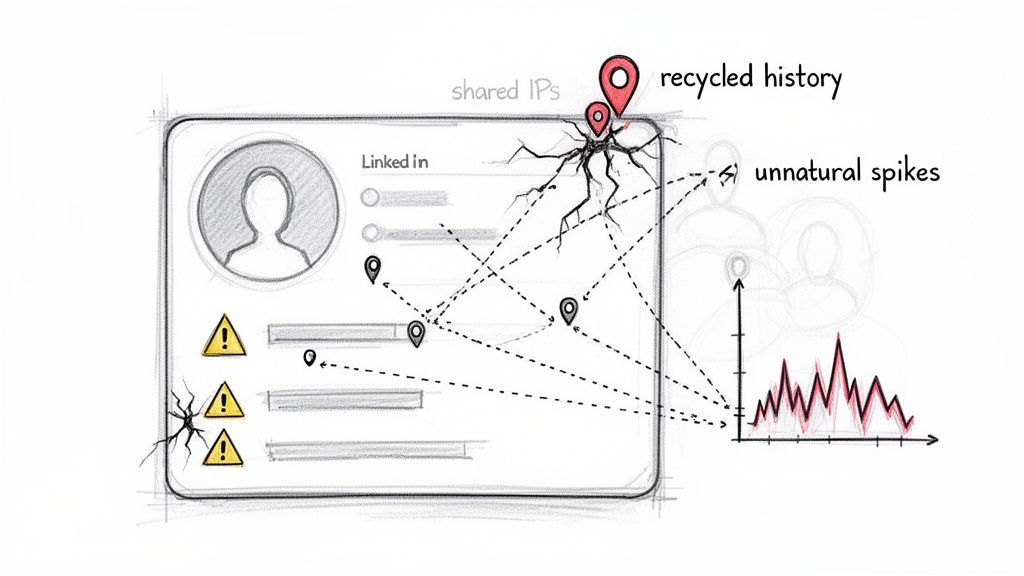
Think of it this way: imagine a security guard at an office building seeing the same employee ID badge being used by three different people, all trying to enter from different doors in different cities. That’s exactly how a rented account looks to LinkedIn’s algorithms. When you, the account's original owner, and maybe even other renters are logging in from all over the map, you create a digital footprint that makes no logical sense.
This is a massive red flag. LinkedIn's systems are specifically designed to catch and flag logins from multiple, geographically scattered IP addresses. A single profile getting accessed from New York, London, and Bangalore within a 24-hour period is completely unnatural and sets off alarms immediately.
The Problem of a Tainted History
Here’s another dirty secret: many rented accounts aren't new. They're recycled. Providers often sell this as a feature, calling them "aged accounts," but this history is almost always a liability. You have absolutely no idea what that profile was used for before it landed in your hands.
Was it blasting out spammy messages that got it flagged? Did a previous renter push the limits and get it temporarily restricted? You're inheriting all this hidden baggage. This puts you one wrong move away from a permanent ban before your campaign even has a chance to get started. Rented accounts are often identified because they fit common patterns, making a basic understanding of fake profile detection crucial.
The Inevitable Ban Cycle: The business model for renting LinkedIn accounts is a race against the clock. Providers know these profiles won't last, so their incentive is to rent them to as many people as possible before they're shut down. You're just the one left holding the bag when the music stops.
The numbers don't lie. A 2024 analysis of 5,000 rented profiles found that a shocking 73% were banned within just 30 days. The main culprits were terrible warm-ups, shared logins triggering IP flags, and no real connection history, which led to an immediate 40% drop in deliverability from day one.
Lacking the Foundation of Trust
On LinkedIn, authenticity is everything. Rented accounts are bankrupt from the get-go. A genuine profile builds its network slowly and logically over time, with connections that reflect a real person's career and interests. Rented accounts, on the other hand, often have a messy, nonsensical network of random people with no rhyme or reason.
This lack of an authentic, aged network is another fatal flaw. When you suddenly start sending hundreds of connection requests to a very specific niche—like SaaS founders in Finland—it looks completely bizarre next to the account's random history of connections from all over the world. This unnatural spike in targeted activity is easy for LinkedIn's platform to spot.
Here’s a quick look at the technical tripwires you’re almost guaranteed to hit:
- Shared and Flagged IPs: Most rental services use cheap, shared proxies that are often already on blacklists.
- No Warm-Up Protocol: You're usually told to start outreach immediately, which screams automation to LinkedIn.
- Inconsistent Activity: The account goes from being completely dormant to hyperactive overnight.
- Recycled Profiles: The account carries the "digital scent" of previous spammers and rule-breakers.
Ultimately, renting a LinkedIn account is just paying for a service that is designed to fail. The very mechanics of how these rentals work violate the core principles of platform security. It’s a clear signal that the only sustainable path for any serious B2B outreach is using clean, exclusive, and properly prepared accounts.
The Strategic Advantage of Owning Verified Accounts
Instead of getting tangled up in the risky business of renting LinkedIn accounts, let's talk about a far more powerful and sustainable approach: ownership. When you stop leasing a disposable tool and start investing in a genuine asset, you completely change the game for your outreach strategy. This isn't just about playing it safe; it's a strategic move that delivers returns that grow over time.
Think of it this way. Renting an account is like borrowing a stranger's car for a cross-country trip. You don’t know its history, you can’t make any upgrades, and the owner could demand the keys back at any moment, leaving you stranded. Owning a verified account, on the other hand, is like having your own perfectly maintained vehicle in the garage—fully insured, with a clean title, ready to go whenever you are.
The real advantage comes down to building a high trust score right from the start. LinkedIn's platform is designed to reward authenticity, and nothing says "trustworthy" louder than a profile backed by real credentials.
The Power of Verification and History
An owned account starts with a rock-solid foundation that a rental profile just can't match. The first, most important layer is ID verification. This process instantly tells LinkedIn that the profile belongs to a real person, which immediately lowers its risk profile compared to all the anonymous, unverified accounts out there.
But verification is just the beginning. A truly powerful account is also "pre-warmed" with an established network. When an account comes with 200-500+ organic connections, it already has a level of credibility that new or generic profiles simply don't. This history tells LinkedIn's algorithm that the account is legitimate and has been used responsibly over time. It’s no surprise our clients find that LinkedIn account ownership can lead to better lead conversion.
Owning the account means you control a durable asset that appreciates in value. Every connection you make and every positive interaction you have adds to its history and strength, increasing its capacity for safe outreach over time. It’s an investment, not an expense.
This foundation of trust unlocks a level of performance that's impossible with rentals. Because these accounts are seen as legitimate, they can handle much higher activity without setting off alarms. To really understand the value of authenticity on the platform, it’s worth looking into the official LinkedIn Verified program.
Achieving Higher and Safer Outreach Limits
So, what does this high-trust status actually mean for your team? It means you can scale your outreach safely and effectively. A rented or brand-new account might get flagged after sending just 20 connection requests in a day. A properly owned and warmed-up account can handle far more.
This expanded capacity is a direct result of its age and verified status. Our internal benchmarks show a massive difference. Teams using pre-warmed, ID-verified accounts with 200-500 organic connections reported 92% ban-free rates over a six-month period. This security allowed them to push for 5x higher daily limits, reaching up to 500 actions per day without pinging LinkedIn's radar.
This kind of performance completely transforms what's possible with your outreach. It means you can:
- Integrate Seamlessly: Confidently connect your accounts to top automation tools like Expandi, Waalaxy, or Dripify, knowing the profile is strong enough to handle automated workflows.
- Scale Predictably: Stop worrying about sudden account bans and start building a predictable lead generation model based on stable, high-volume activity.
- Protect Your Brand: Eliminate the risk of having your company's domain associated with spammy, banned accounts, which protects your long-term reputation.
Ultimately, the choice is clear. Owning your LinkedIn accounts gets you out of the fragile, high-risk world of rentals and puts you in a position of control, security, and sustainable growth. You’re no longer gambling with disposable tools but building a powerful arsenal of high-performing assets to fuel your B2B success.
Your Safety Checklist for LinkedIn Outreach at Scale
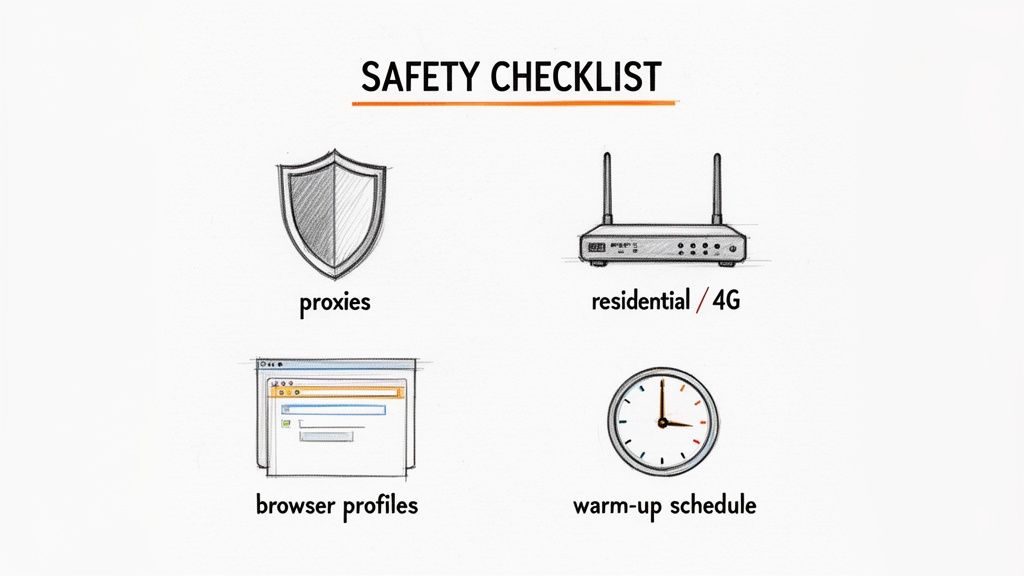
Treat your LinkedIn accounts like the valuable assets they are. While the idea of renting a LinkedIn account comes with its own set of risks, even accounts you own from day one need meticulous care to stay off LinkedIn's radar. Running multiple accounts without a rock-solid security plan is like driving blindfolded—it’s not a matter of if things go wrong, but when.
Think of this checklist as your playbook for scaling outreach the right way. These steps are all about mimicking genuine human behavior, keeping each account’s digital trail separate, and playing by LinkedIn’s rules. Nail these practices from the start, and you’ll protect your investment and build a sustainable outreach engine.
Isolate Each Account's Digital Footprint
This is the cardinal rule of managing multiple accounts: they must never, ever cross paths online. LinkedIn’s detection systems are incredibly sharp at spotting when one person is running several profiles from the same computer or network. That’s a massive red flag that almost always ends with banned accounts.
To get around this, you have to give each account its own private, sandboxed environment. This isn't just a good idea; it's a non-negotiable for any serious operation.
- Use Dedicated Browser Profiles: Tools like GoLogin, Multilogin, or Incogniton are essential. They let you create unique browser environments where each account has its own cookies, cache, and digital fingerprint, making it look like a completely separate device to LinkedIn.
- Never Log Into Multiple Accounts in the Same Browser: Don't even think about using different Chrome profiles or switching between Firefox and Safari on the same machine. These methods don't do enough to hide your device’s true identity, leaving you wide open to getting caught.
Imagine each browser profile as a totally different laptop. You wouldn't log into ten different LinkedIn accounts from one computer, and the same logic applies here. Proper isolation is the bedrock of safe multi-account management.
Mask Your IP Address with High-Quality Proxies
Your IP address is your digital street address. If all your accounts are "calling home" from the same address, LinkedIn will immediately know they’re connected. The solution is to give every single account its own dedicated proxy, which acts as a unique IP address for that profile.
But be warned: not all proxies are created equal. Using a cheap, low-quality proxy can be even more dangerous than using none at all.
A cheap, datacenter proxy is a dead giveaway. These IPs come from commercial servers, not residential homes, which is completely unnatural for a personal LinkedIn profile. It basically screams "automation" and gets you flagged instantly.
To fly under the radar, you need proxies that look and act like real people.
- Residential Proxies: These IPs come from real Internet Service Providers (ISPs) and are tied to actual homes. This makes all your activity look like it's coming from a regular person on their home Wi-Fi, which is exactly what you want.
- 4G/5G Mobile Proxies: These are the gold standard for a reason. Mobile IPs are dynamic and shared by thousands of real phone users, making it nearly impossible for LinkedIn to single out and blacklist one.
Always assign one proxy to one account, and never reuse it. For a much deeper dive into staying safe, our guide to safe LinkedIn account management covers more advanced strategies.
Respect the Platform with a Smart Warm-Up Schedule
Finally, you can't just fire up a new account and start blasting out 100 connection requests a day. A sudden, massive jump in activity is the quickest way to get an account restricted or shut down. You have to "warm up" the account by slowly ramping up its activity over time.
This process essentially teaches LinkedIn's algorithm that your activity levels are normal. A slow and steady warm-up builds trust with the platform and primes the account for long-term success.
A standard warm-up schedule looks something like this:
| Week | Daily Connection Requests | Daily Messages | Daily Profile Views |
|---|---|---|---|
| 1 | 5–10 | 5 | 15–20 |
| 2 | 10–15 | 10–15 | 25–30 |
| 3 | 15–20 | 20–25 | 40–50 |
| 4 | 20–25 | 25–30 | 50–75 |
After about a month of this patient, gradual increase, the account will be seasoned enough to handle higher outreach volumes without setting off alarm bells. This methodical approach is how you turn your LinkedIn accounts into durable, long-lasting assets for your business.
Frequently Asked Questions About LinkedIn Accounts
If you're trying to scale your B2B outreach, you've probably heard whispers about renting LinkedIn accounts. It can sound like a tempting shortcut, especially when you need to ramp up your lead generation fast. But what's the real story behind it?
We get these questions all the time from agencies and B2B teams. Let's cut through the noise and talk frankly about the risks, the costs, and what actually works for building a sustainable outreach program.
Is It Legal to Rent a LinkedIn Account?
Let's get this one out of the way first. You won't face jail time for renting a LinkedIn account, but you are walking directly into a major violation of LinkedIn's User Agreement. The terms you agree to when signing up strictly prohibit selling, sharing, or renting your profile.
The consequences aren't legal, they're platform-based—and they are severe. LinkedIn will suspend or permanently ban the account, and when it does, every connection, conversation, and lead you've worked on vanishes in an instant. There's no getting it back.
The core issue isn't about breaking the law; it's about breaking the platform's rules. The entire business model of renting a LinkedIn account operates in a gray market that LinkedIn is constantly trying to eliminate, putting your campaigns and reputation on a countdown timer.
How Much Does It Cost to Rent an Account?
On the surface, you'll see prices ranging from $50 to $200 per month. The cost usually depends on factors like the profile's age or its number of connections.
But think of that monthly fee as just the entry ticket. The real price you pay is when the account inevitably gets shut down. You don't just lose the rental fee—you lose all the sunk costs of your time, your team's effort, and the potential revenue from every lead in your pipeline. The true cost is your initial investment plus the complete loss of momentum.
Can LinkedIn Detect Rented Accounts?
You bet they can. LinkedIn's security algorithms are incredibly sophisticated and are specifically trained to spot the tell-tale signs of a rented or shared account. It’s a cat-and-mouse game, and LinkedIn has the upper hand.
These are the dead giveaways its systems are looking for:
- Jumping IP Addresses: If an account logs in from New York in the morning and London in the afternoon, it’s a massive red flag for shared use.
- Sudden Bursts of Activity: A profile that has been quiet for months and suddenly starts firing off 50 connection requests a day is going to get flagged for a manual review, fast.
- A "Hollow" Profile: Many rental accounts just don't feel real. They lack a believable work history, consistent engagement, or a natural network of connections, making them easy for algorithms to spot.
Most providers use cheap, shared proxies that are already on LinkedIn's radar, making detection even easier. The platform is designed to protect its users by weeding out inauthentic activity.
What Is a Safer Alternative to Renting?
The only truly safe and scalable strategy is to own high-quality, aged, and ID-verified LinkedIn accounts. This isn't just a slightly better option—it's a fundamentally different approach that puts security and long-term value first.
Here’s why owning is the clear winner:
- Full Control: The account belongs to you and only you. This immediately eliminates the number one red flag of shared access from multiple locations.
- Instant Credibility: These accounts come pre-warmed with a history and connections. Many are even ID-verified, which gives them a high "trust score" with LinkedIn from the start.
- Built for Scale: When you manage your owned accounts correctly—using dedicated proxies and separate browser profiles—you can safely handle a much higher volume of outreach. This lets you scale your campaigns predictably, without constantly worrying about bans.
Instead of trying to cheat the system, this approach works within its principles. You’re not paying for a disposable rental; you’re investing in a durable asset that becomes more valuable over time. Owning your accounts is the foundation for a predictable, scalable, and secure B2B outreach machine.
Ready to build a powerful and secure outreach engine without the risks of renting? BIDVA provides real, ID-verified, and pre-warmed LinkedIn accounts that you own completely. Invest in assets that grow with you and start scaling your campaigns with confidence. Learn more about our secure LinkedIn accounts.